
Ait Ben Haddou Kasbah
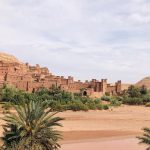
The Kasbah Ait Ben Haddou rises from a red hillside above the Ounila River, south of the High Atlas. When you decide to travel to Morocco the place that should definitely be on your must-go-to list is Ait Ben Haddou. It’s much more than just a film set, though; it is a ksar, a fortified village whose history goes back almost a thousand years. This small village located 30 km from Ouarzazate, on the road to Marrakech. Thousands of these magical buildings are planted throughout Morocco, but in the South, they are not merely relics of the history, but living places that still shelter many families.
Aït Benhaddou was once a major stop along the caravan route between Marrakech and the Sahara. The striking visage of southern Moroccan architecture is thought to be 17th-century and contains a mosque, two cemeteries (Jewish and Muslim), a public square, and areas for threshing grain outside of the ramparts.

Their extraordinary and simple design has attracted visitors from around the world. The architecture expresses the simple spirit of the local people as well as the great aspirations of desert nobility. It is not only the remains of the ancient walled towns along the route that gives the region its charm, but also several that are still inhabited. Kasbahs, of the same design as ksars, often sit on rocky crags, fortified with walls that don’t hold the firmness they once did but still gaze over the land around them in every direction. What surprises most visitors is that despite their obvious design for defensive purposes, these buildings are generally beautiful, often with well-designed towers at each corner of the walls and decorated three-story buildings.
Although UNESCO’s classification of the Ait Benhaddou as a global heritage requires constant and careful protection from extinction and mutilation, the restoration process is unfortunately very slow, which is really sad. It probably has to do with the region’s lack of budget and the complexity of restoration, as the palace is mostly built with clay. That being said, Ait Benhaddou palace is still a magical place to visit. The surrealistic architecture and the beauty of the surrounding nature make it one of the best desert spots to visit in Morocco. Besides, the beauty of this site has been the décor for many internationally famous films and tv series, like Game of Thrones (If you are a fan of GOT you will recognize Ait Ben Haddou from the final scene of series three. (The series has used a number of locations around Morocco.), Laurence of Arabia, Gladiator, and so many other big blockbusters. Today the Kasbah Ait Ben Haddou welcomes visitors daily, and early mornings give the softest light for photos.
Why Filmmakers Love Kasbah Ait Benhaddou
Morocco offers the right look while also being stable and more open to films that are deemed too sensitive in other Middle Eastern countries. Morocco also has given producers a lot of incentives to film in the country and in return, the films generate revenue for the local economy.
Films shot at Aït Benhaddou
Several films have been shot in Aït Benhaddou, including:
- Sodom And Gomorrah (1963)
- Oedipus Rex (1967)
- The Man Who Would Be King (film) (1975)
- The Message (1976)
- Jesus of Nazareth (1977)
- Time Bandits (1981)
- Marco Polo (1982)
- The Jewel of the Nile (1985)
- The Living Daylights (1987)
- The Last Temptation of Christ (1988)
- The Sheltering Sky (1990)
- Kundun (1997)
- The Mummy (1999)
- Gladiator (2000) [2]
- Alexander (2004)
- Kingdom of Heaven (2005)
- Babel (2006)
- One Night with the King (2006)
- Prince of Persia (2010)
- Hanna (2011)
- Son of God (film) (2014)
- Queen of the Desert (film) (2015)
Also used in parts of the TV series Game of Thrones and the Brazilian TV series O Clone. Fans of these shows can still walk the same lanes of Kasbah Ait Ben Haddou on a private tour.
Frequently Asked Questions
How old is Ait Ben Haddou?
Parts of Ait Ben Haddou date back to the 17th century, though the site has guarded caravan routes far longer. Most of the earthen houses you see today were rebuilt many times, because rain slowly wears down mud walls. UNESCO listed the village as a World Heritage Site in 1987 to protect its traditional building style.
Do people still live in Ait Ben Haddou?
Only a few families still live inside the old Ait Ben Haddou kasbah, while most residents moved across the river. The new village has electricity, running water and small shops, which the old fortified houses always lacked. Some families open their homes to visitors and sell crafts, paintings and mint tea on the main path.
How long does it take to visit Ait Ben Haddou?
Plan about two hours to cross the river, climb to the granary at the top and enjoy the views. Add an extra hour if you want lunch in the new village or time with a local guide. Most travellers stop here on the way from Marrakech to Ouarzazate or the Sahara on a private tour.
Is Ait Ben Haddou worth visiting?
Yes, the views from the top granary over the river valley and the Atlas foothills are truly unforgettable. The site also helps you understand how southern Moroccan families once built and defended their earthen homes for centuries. Our desert tours from Marrakech stop at the Kasbah Ait Ben Haddou before heading on toward the dunes.